Skip to content
Product

Co-working Space Automation

From smart access to smart energy billing

  • IoT billing
  • Multi-location
  • Real-time metering
  • Custom PCB
  • ESP8266 API

Custom IoT billing platform for a multi-location co-working operator. Delivered August 2019 after they saw our Smart Access work.

When a co-working operator needed meeting-room electricity billed by actual use, not estimates, we built IoT meters, Arduino firmware, a Laravel API, and custom PCBs that pushed usage into their existing management software across every branch.

Discuss an IoT project
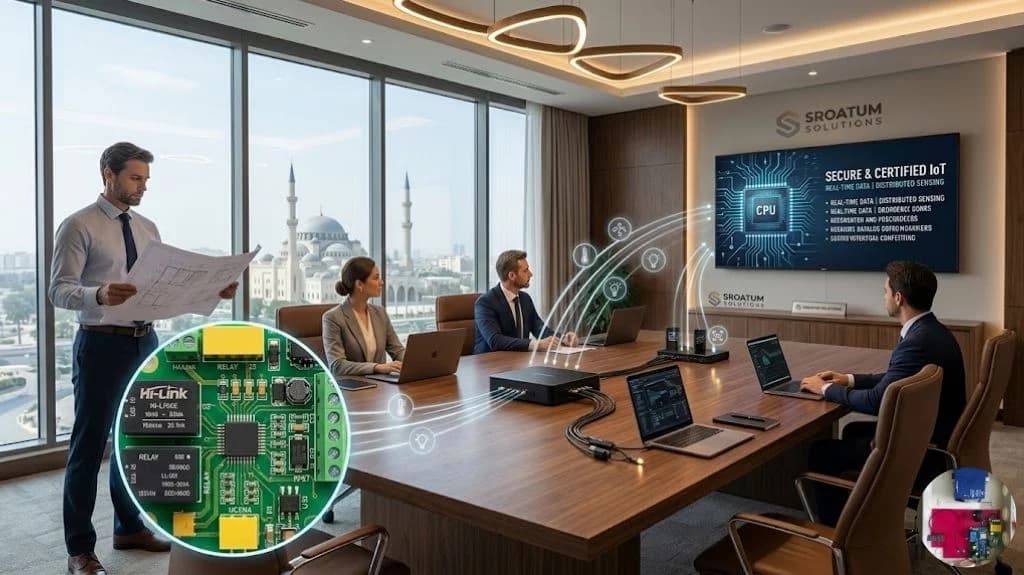
Co-working meeting room with IoT energy automation overlays, custom control hardware, PCB detail insets, and real-time monitoring graphics on a conference display

Case study · August 2019

From smart access to smart energy automation

Businesses often picture automation as apps and dashboards. Here the hard part was linking physical loads to billing software.

In August 2019, shortly after our Smart Access Control work, a multi-location co-working operator asked us to meter meeting rooms and event spaces by actual electricity use and feed the numbers into software they already ran.

The challenge

Billing had to follow real loads, not guesses

Meeting rooms and event spaces saw different customers, different air-con run times, and no link between bookings and the meter.

  • Measure per booking

    Capture electricity consumed during each reservation, not a flat room fee.

  • Push to existing software

    Send usage data into the client's management platform without replacing it.

  • Work across branches

    One architecture for every co-working location they operated.

  • Stay hands-off

    Reset, read, transmit, and bill with minimal staff intervention.

Data flow

Device to billing software

Hardware never talked to the client app directly. The Laravel API authenticated devices, cleaned payloads, and fed the operator's existing platform.

Core components

Hardware, firmware, and middleware in one stack

Each layer had a clear job from the wall socket to the client's ledger.

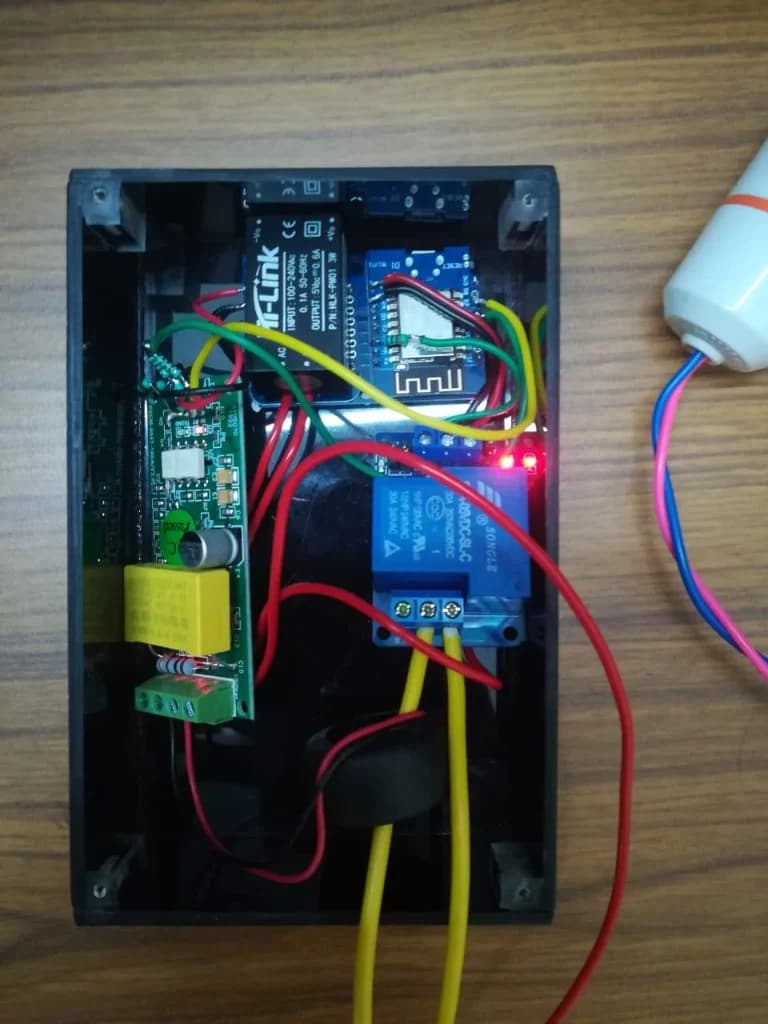
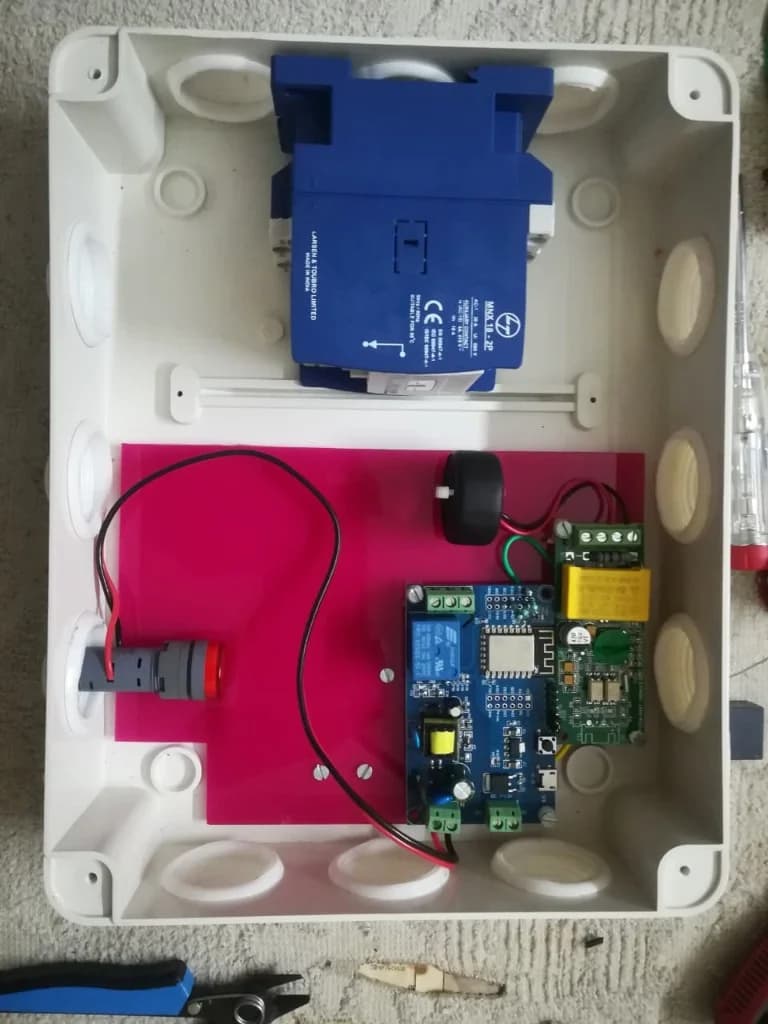
Production IoT enclosure showing PZEM-004T energy meter, ESP8266 controller, and L&T industrial contactor
  • PZEM-004T
  • ESP8266
  • L&T contactor
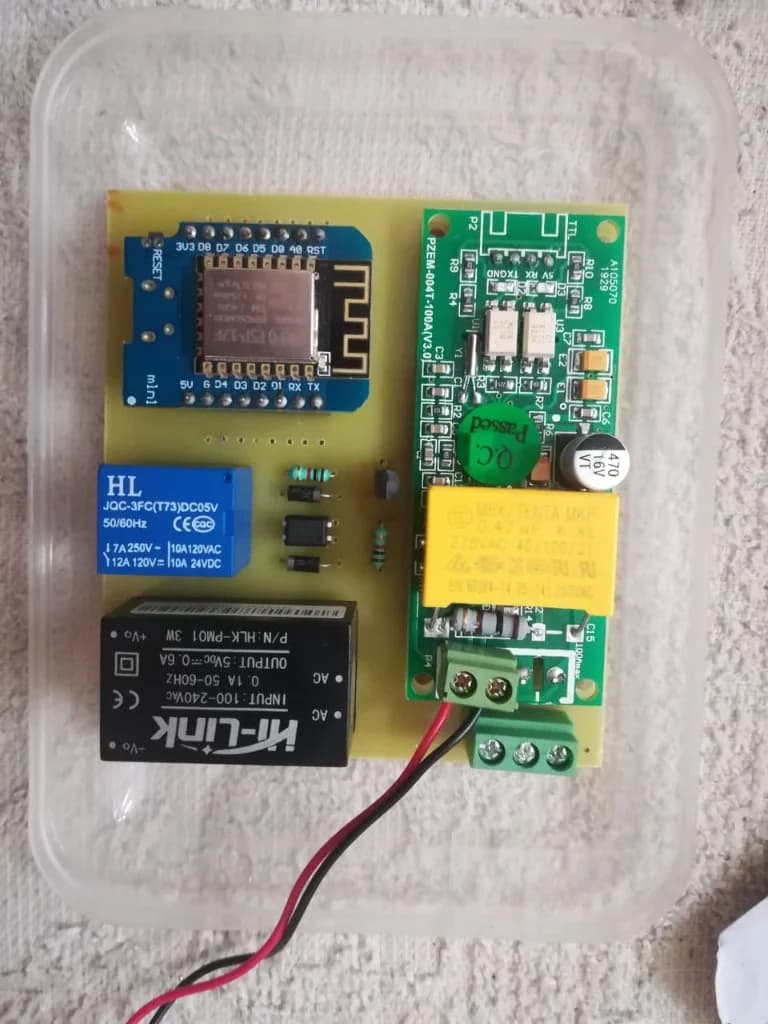
Custom Erratum Solutions IoT Energy Meter V1.0 printed circuit board

Erratum IoT Energy Meter V1.0

  • PZEM-004T

    Measures real-time voltage, current, and accumulated energy on the room circuit.

  • ESP8266 Wi-Fi module

    Runs custom Arduino firmware, connects to Wi-Fi, and posts readings to our API.

  • Erratum Laravel API

    Authenticates devices, validates payloads, and exposes usage to downstream software.

  • Client management software

    Pulls metered energy into invoices and reports the operator already trusted.

  • Industrial L&T contactors

    Switches high-current air-conditioning loads that ordinary relays cannot handle safely.

Measuring electricity

Every kilowatt-hour passed through the meter

The PZEM-004T module sat inline so billing tracked physics, not estimates.

  1. 01

    Reset at booking start

    The accumulated energy register clears when a session opens.

  2. 02

    Measure through the session

    Total energy rises as AC units and appliances run.

  3. 03

    Read at checkout

    Firmware pulls the final register value from the PZEM module.

  4. 04

    Transmit to the cloud

    The ESP8266 posts the reading to the Laravel API for billing.

Production IoT enclosure with L&T industrial contactor, ESP8266 controller, and PZEM-004T energy meter

Bringing the device online

Custom firmware on the ESP8266

Arduino-based code kept the unit autonomous. No local PC required at each site.

  • Read the PZEM module

    Poll voltage, current, power, and energy registers over serial.

  • Track relay and contactor state

    Monitor whether the room circuit is energized or isolated.

  • Maintain Wi-Fi connectivity

    Reconnect after outages and retry failed API calls.

  • Push structured payloads

    Send device ID, session markers, and meter readings to the Laravel backend.

Laravel middleware

Why we sat between device and client app

Direct hardware-to-ERP links are brittle. A dedicated API layer bought room to grow.

  • Device authentication

    Only registered units can post readings to the server.

  • Data validation

    Reject malformed or out-of-range payloads before they hit billing.

  • Firmware upgrades

    Central place to roll out fixes without visiting every branch.

  • Centralized monitoring

    Ops staff see which meters are online and when they last reported.

  • Multi-branch support

    One backend serves every co-working location on the account.

  • Future integrations

    New client tools can consume the same API without touching firmware.

Heavy electrical loads

Industrial contactors for air-conditioning circuits

L&T

MNX contactors

Bench tests showed standard relay boards could not reliably switch large AC loads. Production units paired control electronics with Larsen & Toubro industrial contactors so high-current equipment stayed isolated from the logic board.

IoT control box with Larsen and Toubro MNX industrial contactor for high-power AC switching

From prototype to production

Five stages from breadboard to wall mount

Field trials on hand-built units led to a custom Erratum PCB and sealed production enclosures.

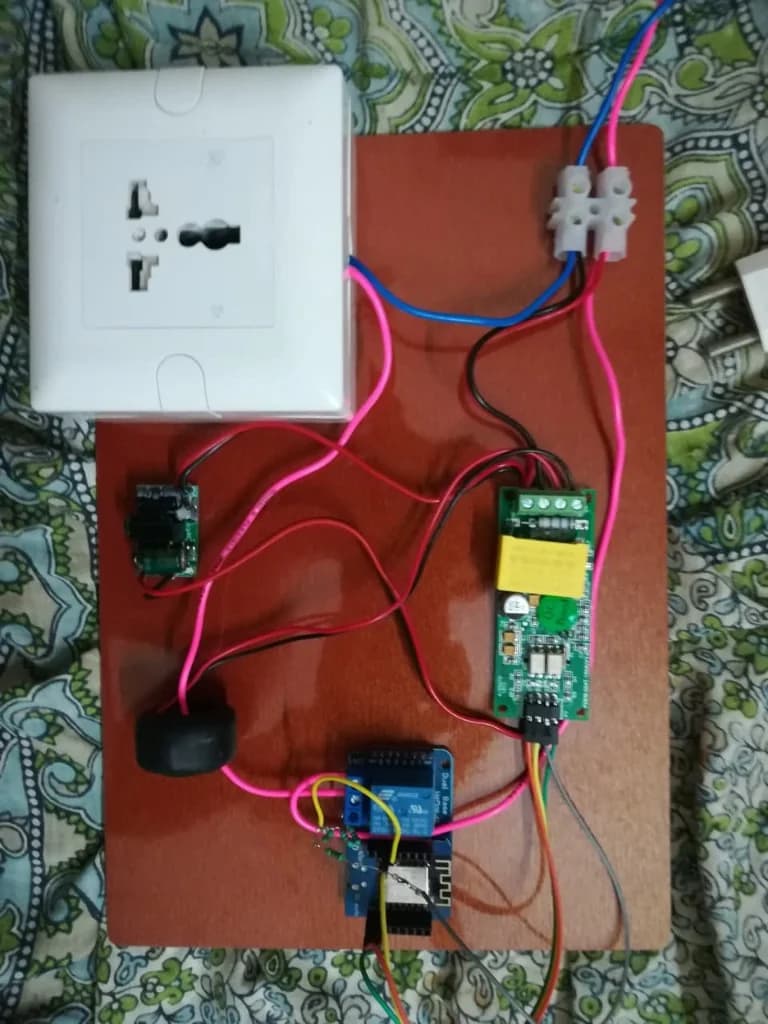
Early co-working energy monitor prototype with PZEM-004T, ESP8266, and relay on a wooden mounting board
  • Proof of concept

    Hand-built board

  • Custom PCB

    Erratum IoT Energy Meter V1.0

  • Production enclosure

    Industrial wiring

  • Field deployment

    Multi-site rollout

Project timeline

August 2019 delivery

From first conversation to units live in multiple branches within one month.

  1. 01

    Discovery

    Client found us through Smart Access and outlined booking-linked billing needs.

  2. 02

    Architecture sign-off

    IoT device, Laravel middleware, and ERP integration plan approved.

  3. 03

    Prototype build

    First unit assembled from PZEM-004T, ESP8266, relay, and power supply modules.

  4. 04

    Firmware and API

    Arduino code and Laravel endpoints developed in parallel.

  5. 05

    Contactor integration

    Industrial L&T switching added for air-conditioning loads.

  6. 06

    Field validation

    Prototype tested on live circuits with real booking workflows.

  7. 07

    Custom PCB

    Erratum IoT Energy Meter board laid out for production.

  8. 08

    Manufacturing

    Production units built, programmed, and QA checked.

  9. 09

    Multi-site rollout

    Devices registered and installed across co-working branches.

  10. 10

    Handover

    Client software consuming meter data; project closed successfully.

Engineering highlights

End-to-end automation skills in one delivery

  • Custom embedded hardware
  • IoT device development
  • ESP8266 firmware
  • Laravel API development
  • Energy meter integration
  • Industrial automation
  • PCB design
  • Cloud-connected devices
  • Enterprise software integration

The best digital solutions do not stop at the screen. They connect hardware, cloud infrastructure, and business workflows into one system your team can run every day.

Erratum Solutions · IoT and software integration

FAQ

Questions about Co-working Space Automation

Plain-language answers about what Co-working Space Automation does and who it is for.

What problem did the co-working space automation project solve?

The operator rented meeting rooms and event spaces to different clients, but air conditioners and appliances drew different loads. Manual calculations were slow and wrong, and their management software had no live energy data. We built meters that tied each booking to measured kilowatt-hours.

How does the system measure electricity during a booking?

Each room runs through a PZEM-004T energy meter module. When a booking starts, the meter resets. It accumulates total energy until the session ends, then the device reads the value and sends it to the cloud for billing.

What hardware was used in the energy monitoring device?

Off-the-shelf modules in early prototypes: PZEM-004T for measurement, ESP8266 for Wi-Fi, relay modules, and an AC-DC supply. Production units used a custom Erratum PCB, industrial L&T contactors for heavy AC loads, and sealed wall enclosures.

Why use a Laravel middleware instead of direct device-to-app communication?

A Laravel API between the ESP8266 and the client's software handles device authentication, data validation, firmware upgrades, centralized monitoring, and multi-branch registration. The client's app pulls clean usage records without speaking to hardware directly.

How was the system deployed across multiple co-working branches?

Each location gets another installed unit registered on the same Laravel backend. Adding a branch means mounting the device, pairing it on the server, and pointing the client's software at the new meter ID. No separate app per site.

What changed from prototype to custom PCB production?

Early builds used breadboards, jumper wires, and module stacks inside test enclosures. After field trials we designed an Erratum IoT Energy Meter PCB that integrated the ESP8266, power supply, and relay footprints with terminal blocks for safer installs and faster rollout.

Who built this project and when?

Erratum Solutions delivered the full stack in August 2019: embedded hardware, Arduino firmware, Laravel API, PCB design, and production units across multiple co-working locations.

Can Erratum Solutions build similar IoT billing systems today?

Yes. We still design embedded controllers, cloud APIs, and integrations with existing business software for energy monitoring, access control, and field automation. Share your load types, branch count, and billing rules on the contact page.

Need booking-linked energy metering or IoT billing?

We design the hardware, firmware, API, and integrations so your team bills from real usage data. Tell us about your sites and load types.

Talk to us

More work